
When Support Steps Back, Students Step Up

Updated: Jan 31
Written By: Anna O'Connor Morin, Associate Superintendent
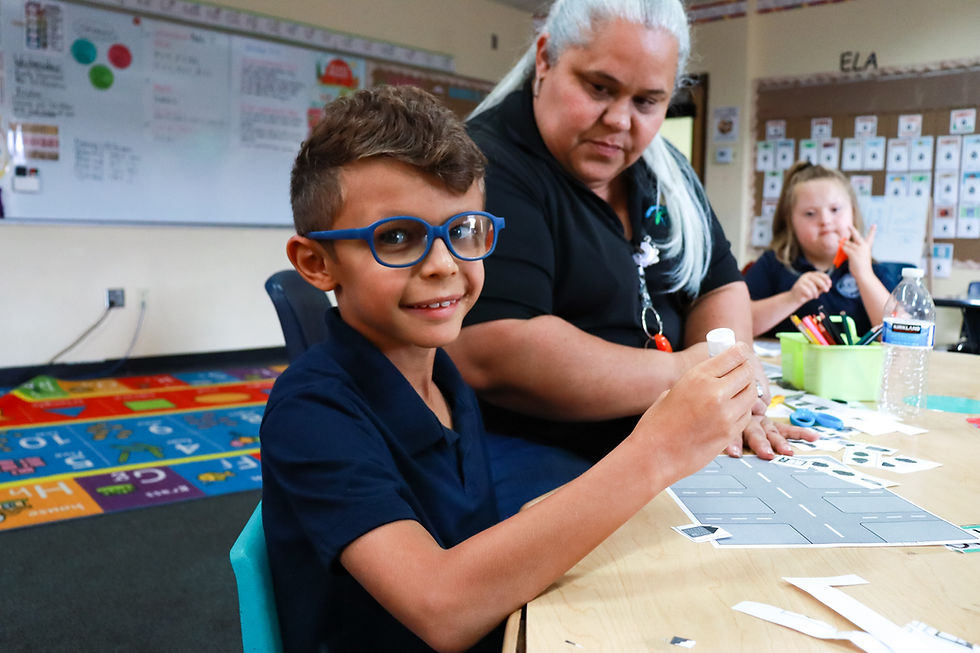
Families often ask for a one to one (1:1) adult support person for their student because they want their child to be safe, successful, and supported—and that makes complete sense. While 1:1 support can be helpful in very specific situations, it is not always the best long-term approach for students in special education.
Most Restrictive Support
A full-time 1:1 adult is considered one of the most restrictive forms of support. It places an adult with the student at all times, which can unintentionally limit opportunities for the student to:
Learn alongside peers
Practice problem-solving independently
Build confidence in their own abilities
Special education services aim to provide the least restrictive supports possible while still meeting a student’s needs.
Barriers to Independence
Although a 1:1 aide is meant to help, constant adult support can sometimes:
Create reliance on an adult instead of learning skills independently
Reduce motivation to try tasks on their own
Make it harder for the student to generalize skills when the adult is not present
Our goal is to help students develop skills they can use across settings—at school, at home, and in the community.
Impact on Social Development
Having an adult nearby always can:
Make it harder for students to interact naturally with peers
Increase feelings of being “different” from classmates
Limit opportunities to practice social problem-solving
Peer relationships are an important part of learning and growth.
Skill-Building vs. Support Dependence
Instead of focusing on “doing for” a student, we want to focus on teaching skills:
Using visual supports
Providing structured routines
Teaching coping and self-regulation strategies
Offering small-group or shared adult support when needed
These approaches encourage growth while still providing safety and structure.
Our Shared Goal
We all want the same thing: for students to feel safe, confident, capable, and successful—both now and in the future. By using thoughtful, less restrictive supports, we can help students build the independence they need to thrive.


Comments